
Edwin Buggage
Editor-in-Chief New Orleans Data News Weekly
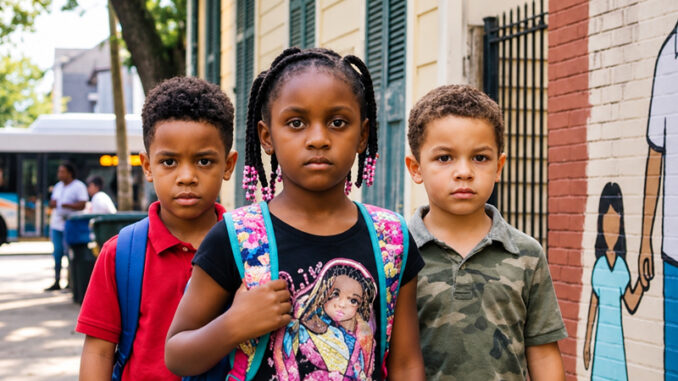
The recent passing of New Orleans Civil Rights Icon Jerome “Big Duck” Smith reminds us that the fight for justice has always included a fight for our children. Smith spent much of his life not only confronting racial injustice but also working directly with young people, teaching them their history, building their confidence, and reminding them that their lives and futures mattered. His work demonstrated a simple but powerful principle: if we want to change the future of our communities, we must invest in our children. That lesson is especially relevant as Louisiana once again confronts troubling national rankings concerning the well-being of its youngest residents.
The 2026 KIDS COUNT Data Book from the Annie E. Casey Foundation ranks Louisiana 48th nationally in overall child well-being and 49th in child health. The state performs better in education, ranking 35th and demonstrating meaningful improvement in recent years.
Those numbers should matter deeply in New Orleans, particularly in Black communities where generations of families have experienced disparities in education, health care, housing, employment and economic opportunity. When children begin life without equitable access to quality health care, early-childhood education and stable family resources, we cannot be surprised when those disadvantages follow them into the classroom and eventually into adulthood.
From Conversation to Action
These issues were discussed during the recent “Families Count: Child and Family Well-Being in New Orleans” forum hosted by Verite News and sponsored by the Annie E. Casey Foundation. Policymakers, educators, health professionals and community advocates examined both the challenges and possible solutions.
Among the most important points raised was the need for greater investment in children from birth to age three. State Rep. Barbara Reich Freiberg emphasized the importance of those early years, while State Sen. Royce Duplessis challenged policymakers to stop viewing early-childhood investment solely as an education issue.
This is a resounding and relevant point. Early-childhood development is connected to almost everything that comes afterward. It affects school readiness, literacy, behavior, and long-term academic achievement. Affordable, quality childcare also allows parents to work, attend college, or pursue job training. Investing in young children strengthens families and ultimately strengthens Louisiana’s workforce and economy.
Health and Poverty Cannot Be Separated from Education
Moreover, healthcare requires the same urgency. Several participants during the forum highlighted concerns about Louisiana children lacking consistent access to pediatricians and families experiencing difficulties maintaining health coverage. With this being the reality for a disproportionate number of our young people, we cannot claim to value children while allowing preventable barriers to medical care to remain.
Further, it is true that a high-quality teacher can provide excellent instruction, but education and schools cannot solve deeper social problems created by housing instability, food insecurity, inadequate healthcare, transportation difficulties, and family economic hardship. For too many Black families in New Orleans and across the state, these challenges overlap.
Addressing them requires government agencies, schools, health systems, nonprofits, businesses, and community organizations to work together rather than operating in separate silos.
Policy Choices Matter
Louisiana’s educational improvement provides an important lesson: Policy Choices Matter. When government establishes priorities, directs resources toward them and holds institutions accountable, outcomes can improve.
We should apply that same determination to early-childhood education, healthcare and family economic stability.
The state should expand access to affordable early learning, protect children’s health coverage, strengthen neighborhood-based health services and make it easier—not harder—for families to access assistance. We must also invest in literacy, intervention programs, mentoring and other initiatives that reach children before academic struggles become lifelong barriers that contribute to poor outcomes for our children, that include the school-to-prison pipeline.
Continuing the Fight for Our Children
Louisiana being 48th or 49th should not be acceptable, and never become normalized.
Yes, reports can identify disparities. Forums can begin conversations. Researchers can provide evidence. But none of those things alone changes a child’s life. Action does; this is where citizens, leaders, and all stakeholders must be in accord in working toward optimizing the best possible outcomes for our children.
Jerome “Big Duck” Smith understood this long before there were reports and rankings to confirm it. His commitment to young people was rooted in the belief that fighting for Civil Rights also meant preparing the next generation to inherit those rights, understand their history, and build stronger communities.
As New Orleans remembers his life and Louisiana considers what these latest numbers say about the condition of our children, honoring that legacy must mean more than celebrating the work of the past. It means continuing it.
If we truly believe our children are our future, then we must fight for them with the same determination that Smith and generations of community leaders fought for us. Thus our budgets, policies, and priorities must demonstrate that commitment.
It is the greatest tribute we can give those who fought before us is to make certain the next generation has a better chance to thrive.
Recommended For You.


Be the first to comment