
Glenda Bell
Data News Weekly Contributor
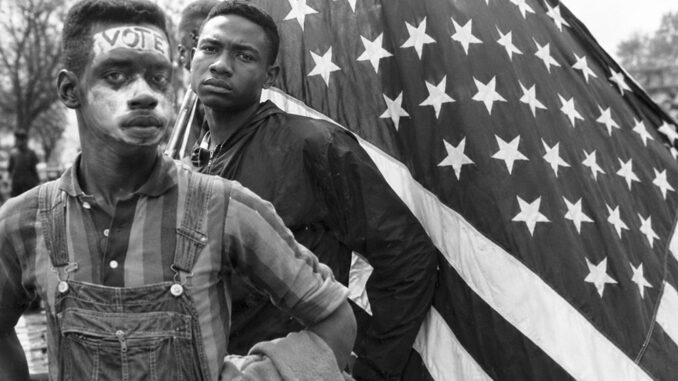
With the November 3rd Midterm Elections approaching, voting rights and Black Political Representation have emerged as major national issues as voters prepare to cast ballots under newly drawn congressional maps in several states.
At the center of the debate is the U.S. Supreme Court’s April Decision in Louisiana v. Callais, a case involving Louisiana’s Congressional Districts and Section 2 of the Voting Rights Act of 1965. The case originated after litigation over whether Louisiana’s Congressional Map provided Black Voters a fair opportunity to elect candidates of their choice.
Louisiana had created a Second Majority-Black Congressional District after a federal court found that an earlier map likely violated Section 2 of the Voting Rights Act. The new district was subsequently challenged as an unconstitutional racial gerrymander.
The Supreme Court ultimately ruled that race could not be used in the manner Louisiana employed to create the Second majority-Black District, significantly affecting how Section 2 can be applied in redistricting cases.
The consequences are now being felt in Louisiana.
Congressman Cleo Fields, whose 6th Congressional District had a Black Voting-Age Majority, announced he would not seek reelection after the district was redrawn. The new district has a Black Population of approximately 25 percent, compared with about 53 percent under the previous configuration, according to the Associated Press.
The effects extend beyond Louisiana. Nine states will use new U.S. House Districts for the 2026 Midterms: Alabama, California, Florida, Louisiana, North Carolina, Ohio, Tennessee, Texas and Utah. The changes affect approximately 10 percent of the nation’s electorate, making redistricting a significant factor in this year’s Congressional Elections.
For Black Communities, particularly across the South, the debate reaches beyond individual candidates or political parties. At issue is how Congressional Districts are constructed, how communities are represented and how Federal Voting-Rights Protections will operate following the Supreme Court’s Decision.
The Voting Rights Act has played a central role in challenging electoral practices that diminish minority voting strength. The Callais Decision now changes the legal framework surrounding the use of race in drawing districts intended to remedy potential vote dilution.
Louisiana provides a particularly visible example. Predominantly Black Communities such as Scotlandville in Baton Rouge that previously sat within a majority-Black Congressional District are now part of a district where Black Voters represent a substantially smaller share of the electorate.
As Americans head toward the November Midterms, the consequences of redistricting will become increasingly tangible.
For Black Voters, the election is occurring amid a larger national debate over a fundamental question: How will Black Political representation be protected and shaped in the next chapter of American Democracy?
Recommended For You.

Be the first to comment