
Aaliyah Brown Data News Weekly Contributor
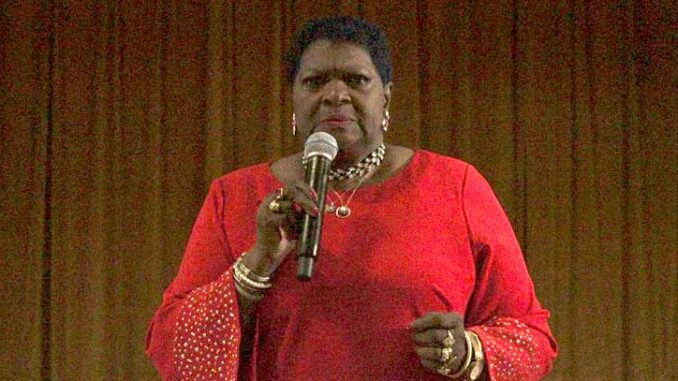
Dr. Joyce Turner-Keller is a grandmother, a mother and a minister and she has also been living with HIV for 25 years. She continues to tell her story to change the face of what HIV looks like, speaking as part of the “Canvas of Change: Art, Awareness and Advocacy” effort to continue her mission to destigmatize HIV/AIDs as part of World AIDS Day.
“If change is going to come, if we’re to end the epidemic and the acquisition of HIV and AIDS, you’re supposed to be motivated, mobilized, and you’re supposed to be educated,” Turner-Keller said.
Black Women make up 66-percent of new HIV infections according to the Centers for Disease Control and are among the highest rate for infections due to incidence of sexual violence and assault and lack of access to healthcare. Turner-Keller, a Baton Rouge native, who was diagnosed with HIV at the age of 52, shared that she did not know she had been infected by the virus as a result of a rape. It was only when she was receiving medical treatment for a car accident later on, did she and her doctors discover the virus.
In the United States, Black Americans made up more than one-third of all new diagnoses that year, CDC Data Show. Louisiana’s numbers reflect those national patterns. As of mid-2025, the Louisiana Department of Health reported 23,910 people living with diagnosed HIV, and nearly 47-percent had an AIDS Diagnosis. In 2024 alone, the state recorded 871 new HIV Diagnoses, with the New Orleans metropolitan area ranking among the highest in the nation for HIV Diagnosis rates.
Public Health officials say those statistics highlight why outreach events like Canvas of Change remain necessary, especially in cities with entrenched disparities.
“World AIDS Day reminds us that progress is possible when the community unites,” said Dr. Kathleen Kennedy, the Dean of the College of Pharmacy and the Director of The Center for Minority Health and Health Disparities Research and Education at Xavier University of Louisiana, who emphasized the power of unity and community work. “When artists create, when communities gather, and when supporters invest into the change,” Kennedy said as she joined Turner-Keller for a Community Awareness Event on Dec. 1st.
Young adults remain a key demographic for prevention efforts, Kennedy said. State Surveillance Data show a consistent concentration of new HIV cases among people ages 13–24 and 25–34. Turner-Keller, whose work often focuses on storytelling and trauma-informed support, said art can make difficult conversations more accessible for people who might otherwise hesitate to engage.
Organizers encouraged community leaders to connect groups with local resources, including HIV Testing Providers, Mental-Health Programs and Community Clinics offering medication access and care navigation. Xavier Leaders also announced plans to expand peer-education training in 2026 to better prepare students to lead discussions on sexual health and stigma reduction.
“I am not ashamed. I am living, I am thriving and I am a contributing member to society,” Turner-Keller said.
Recommended For You.

Be the first to comment