
Edwin Buggage
Editor-in-Chief New Orleans Data News Weekly
A Historic Tradition Continues
While today you can see them at festivals and featured on television programs and documentaries, this sacred tradition began and continues to be its most authentic on the backstreets of New Orleans. Beyond those who simply see their colorful suits and rhythmic, percussive chants, lives one of the city’enduring traditions—the Mardi Gras Indians, also known as Black Masking Indians.
Recently spotlighted on 60 Minutes, this centuries-old Cultural Practice has continued to draw national and global attention, reminding audiences that New Orleans, with its many powerful traditions, while in many instances has been commercialized, in its purest essence are not staged—it is lived.
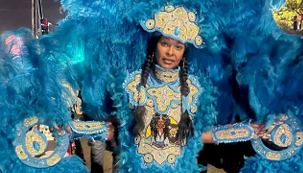
The segment highlighted the dedication of Big Chiefs and tribe members who often spend an entire year handcrafting elaborate suits made of beads, feathers, and rhinestones—works of art that carry history, identity, and cultural pride.
A Legacy Rooted in Resistance and Honor
To the uninitiated, Mardi Gras Indian Tradition dates back to the 1800s and is rooted in a profound historical relationship between African Americans and Native Americans. Indigenous communities often sheltered enslaved Africans who escaped into the Louisiana bayous, and masking became a way to honor that bond while preserving African Cultural Expression under oppressive conditions.
What emerged was more than a celebration…it was resistance. Moreover, at a time when Black People were excluded from mainstream Mardi Gras Festivities, they created their own cultural space, one that fused African, Caribbean, and Indigenous influences into a uniquely New Orleans Expression of Identity
Artistry, Discipline, and Community
The recent 60 Minutes feature emphasized the extraordinary craftsmanship behind the suits, which can weigh over 100 pounds and take thousands of hours to complete. But beyond the beautiful spectacle lies discipline, mentorship, and community structure. Each tribe operates with roles—Big Chief, Spy Boy, Flag Boy—forming a system that teaches leadership, responsibility, and cultural continuity, with many having multigenerational ties to this Rich Cultural Tradition.
From New Orleans to the World
In this culture that continues to evolve, what began in neighborhood streets now has a global impact. The music, chants, and visual artistry of Mardi Gras Indians have influenced funk, jazz, fashion, and global performance culture. Artists and Cultural Ambassadors have carried these traditions beyond Louisiana, into a symbol of Black creativity and resilience worldwide.
The 60 Minutes spotlight reinforces that this is not just a local tradition—it is a Global Cultural Treasure.
Preservation as a Responsibility
Yet, like many Black Cultural Traditions in New Orleans, Mardi Gras Indian Culture faces threats from displacement and rising costs of living in the city due to gentrification. The same communities that sustain this culture are often the most vulnerable.
The message from the culture bearers during this piece and many others who’ve covered them is clear: if it is not preserved, it can be lost. And if it is lost, New Orleans—and the world—loses a piece of living history.
More Than a Tradition—A Cultural Blueprint
The Mardi Gras/ Black Masking Indians truly represent more than the pageantry of their elaborate suits and celebrations that draw thousands. They are historians, artists, and our cultural guardians. Their work over the centuries reflects the power of the Black Community, the importance of identity, and the enduring legacy of resistance through creativity.
Above all, as the world continues to discover what authentic New Orleanians have// always known, one truth remains: the Mardi Gras/Black Masking Indian Tradition is not just important to this city, representing one of the many gifts New Orleans has given to the world.
Recommended For You.


Be the first to comment