
Story and Photos by Marissa Belle
Data News Weekly Contributor
Childhood Trauma is a common public‑health issue that shapes brain development, long‑term health, and emotional well‑being. Local health professionals say they are working to spread awareness for parents and guardians for early detection. “Adverse Childhood Experiences” or ACEs, are early stressors that can alter brain chemistry, heighten emotional responses, and increase the risk of chronic illness later in life. According to the Center for Disease Control, the toxic stress caused by ACEs can disrupt healthy brain growth and weaken children’s immune and stress‑response systems. These effects begin early, often before children can form memories, and can influence behavior, learning, and health well into adulthood.
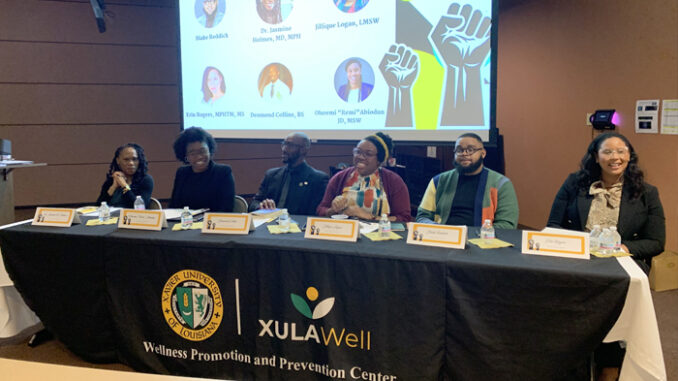
“Ultimately, what that means is the things that happen to you in childhood determine your adulthood and trajectory of life,” said Dr. Jasmine R. Holmes, a Pediatrician, Child Wellness Advocate. “Your health outcomes. Things you can’t recount in your mind, your body is keeping score,” Holmes added as she spoke at the 2nd Annual “Conquering ACEs” Seminar at Xavier University of Louisiana.
Holmes educated the community on how ACEs shows up in homes, schools, and community spaces, and why recognizing these patterns is essential for early intervention and healing. While ACEs can affect children from any background, experts noted that social inequalities such as poverty, discrimination, and community violence can intensify their impact in certain communities, highlighting the importance of examining how research on ACEs translates into real‑world practice.
“There is a gap in research and understanding around ACEs and how to effectively translate all of this dynamic research into larger public health initiatives,” said Erin Rogers, a Public Health Professional and Special Projects Director for the Louisiana Department of Health.
Childhood Trauma also connects with identity, especially for young Black Men navigating expectations that limit how they can express themselves. Young Black Men are often taught to suppress emotion long before they understand what they are feeling and the panelists encouraged the audience to think more deeply about how those early messages shape behavior in ways that are often misunderstood.
“Oftentimes you see Black Men engaging in high-risk behaviors, and we don’t always ask where that origin lies,” said Desmond Collins, the Coordinator for Black Male Engagement at Xavier. “The first victims of patriarchy are boys, because they are robbed of their human identity,” he added.
The racialized environments where children spend much of their time, including schools and youth‑serving programs also contributes to ACEs. When children do not fit the expectations of these systems, their struggles are frequently labeled rather than recognized for what they truly are.
“Oftentimes you’ll see ACEs play out in kiddos in behaviors and when you don’t fit the mold, you’re villainized and criminalized,” said Jillique Logan, the Manager of the Alternative to Detention Program at the St. Charles CARE Center.
The panel encouraged rethinking these labels often placed on young people who struggle. Many children fall through every social safety net long before they ever encounter a counselor or courtroom.
“I’m not working with bad kids. I’m working with hurt kids,” said Oluremi Abiodun, a Program Associate at the Vera Institute of Justice. “Our kids deserve that grace to be hurt and to act out because they’re hurt,” she added.
This emotional impact within families, especially in communities where mental health is rarely discussed openly. Panelists noted that the importance of emotional support extends far beyond traditional advice, shaping how young people learn to process pain and seek connection.
“Growing up, I also heard my grandma tell my older cousins, ‘Go pray about it.’ And it sounds good in that moment, but I needed more. They needed more help,” said Blake Reddick, an Educator, Minister, and Community Leader.
That healing begins with awareness and intentional learning.
“We have to educate ourselves. Before we can educate the youth, we have to educate ourselves,” Holmes said.
Recommended For You.


Be the first to comment