
Glenda Bell
Data News Weekly Contributor
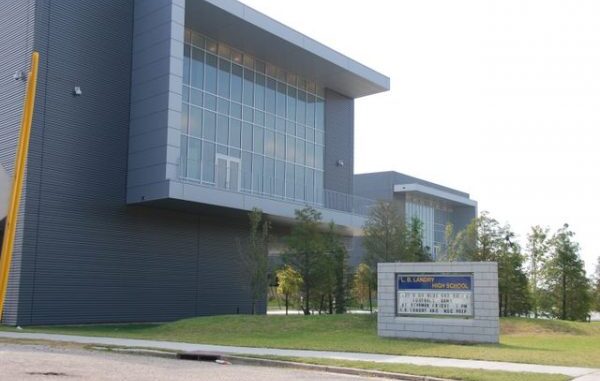
The uncertain future of L.B. Landry High School is raising concerns beyond one Algiers Campus, as declining enrollment forces New Orleans Education Leaders to confront difficult questions about the future of Historically Black Neighborhood Schools. (take off bold) (Maybe create shadowed box)
The Algiers Charter School Association recently voted not to renew its contract to operate L.B. Landry for the 2027 School Year, citing a 68 percent decline in enrollment since 2014. The decision does not mean Landry will automatically close. NOLA Public Schools must determine the next steps for the campus, which could include identifying another operator, returning the school to Direct District Control or considering other options for its future.
More Than a School
For generations of Algiers residents, Landry has represented more than a place where students attended classes.
Named for Dr. Lord Beaconsfield Landry, a prominent Black Physician and Civic Leader, the school traces its history to 1938 and became a high school in 1942. It was the first high school in Algiers to enroll African American Students and has long held an important place in the Black Community on the West Bank.
That history is part of why the current debate carries significance beyond enrollment figures.
Schools such as Landry have historically served as community anchors, producing generations of graduates while becoming a gathering places for athletics, culture, neighborhood organizations and alumni. When enrollment declines threaten those institutions, communities face the possibility of losing not only educational facilities but pieces of their history.
Declining Enrollment Creates Citywide Challenge
Landry’s situation comes as NOLA Public Schools confronts a broader decline in student enrollment and considers how to maintain financially sustainable schools with fewer students.
For individual campuses, declining enrollment can quickly become a financial challenge because fewer students generally mean fewer dollars available to support teachers, academic programs, extracurricular activities and building operations. Algiers Charter has cited that financial pressure as a major factor in its decision regarding Landry.
The issue also highlights how New Orleans’ post-Katrina Education Landscape has changed the relationship between schools and neighborhoods. With citywide enrollment rather than traditional neighborhood attendance zones, students may attend schools far beyond the communities where they live.
That reality can create additional challenges for Historically Black Schools that once drew much of their enrollment directly from surrounding neighborhoods.
Community Has a Voice in Landry’s Future
Landry’s fate has not yet been determined. NOLA Public Schools continues to engage with the community as part of the Charter Renewal Process, giving residents, alumni, families and other stakeholders an opportunity to voice their concerns and perspectives about the school’s future.
Whatever happens at Landry could carry implications beyond Algiers.
The questions surrounding the school reflect a larger challenge facing New Orleans: how to respond to declining enrollment while recognizing the cultural and Historical Significance of Institutions that have educated generations of Black New Orleanians.
For education leaders, the challenge will be balancing enrollment and financial realities with the interests of students, families and communities.
For Landry Alumni and the surrounding community, the decisions ahead will help determine whether an institution that has survived segregation, Hurricane Katrina and major transformations in New Orleans Public Education will continue serving another generation.
Recommended For You.

Be the first to comment