
New Orleans is facing another critical moment in the Future of Public Education as declining student enrollment could lead to additional school closures and consolidations. While district officials point to financial challenges and shrinking student populations, the potential impact on Black students, families, educators and Historic Neighborhood Schools raises serious concerns about educational equity and the preservation of community institutions.
According to NOLA Public Schools, the district has more than 5,400 unfilled seats, including approximately 3,800 in elementary and middle schools and 1,600 in high schools. Enrollment has declined by more than 4,000 students since the 2019–2020 school year, prompting Superintendent Fateama Fulmore to develop recommendations for restructuring the school system.
For many Black families, however, schools represent far more than buildings where children receive an education. They are institutions that have shaped generations, produced community leaders and served as centers of neighborhood identity and pride.
Historic Schools and Community Identity
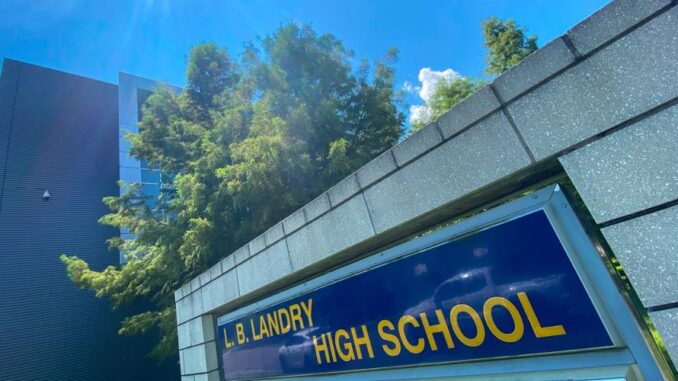
Among the schools facing uncertainty is L.B. Landry High School in Algiers, an institution with Deep Historical Significance in New Orleans’ Black Community. Its potential closure has sparked opposition from alumni, families and community advocates who believe preserving its legacy is essential.
Dr. Martin Luther King Jr. Charter School in the Lower Ninth Ward, the neighborhood’s only public school, also faces possible closure. Losing such institutions could further weaken communities already challenged by population loss, economic inequality and limited neighborhood resources.
The disappearance of historic schools can also mean losing traditions, alumni networks, athletic programs and cultural connections that have united families across generations.
The Impact on Black Students and Families
For students, school closures can create significant disruptions. Children may be required to travel farther, adjust to unfamiliar environments and rebuild relationships with teachers and classmates.
These challenges can be especially difficult for students receiving Special Education Services or academic interventions. According to a recent Cowen Institute Survey, 61% of New Orleans Public School Parents expressed concerns about potential closures, rising to 70% among families of children receiving Special Education Services.
For working families, longer commutes and transportation difficulties could create additional financial and scheduling burdens.
A Call for Equity and Community Engagement
While school officials must address declining enrollment and financial sustainability, decisions cannot be based solely on enrollment figures and operating costs.
Academic performance, transportation access, neighborhood needs and the Historical Importance of Schools must also be considered. Parents, educators, alumni and community leaders deserve meaningful opportunities to participate before final decisions are made.
New Orleans has a long history of Black educators and educational institutions overcoming barriers to provide opportunities for generations of students. That legacy must remain part of the conversation.
Ultimately, the challenge is not simply determining which schools should remain open. It is ensuring that every child, regardless of neighborhood or economic circumstances, race or nationality, has access to a quality education.
Recommended For You.

Be the first to comment