
Edwin Buggage Editor-in-Chief Data News Weekly
A City at a Crossroads
New Orleans is truly a magnificent city. With more than 300 years of rich history, it stands as one of the most culturally international cities in the United States. Despite profound changes since Hurricane Katrina, its uniqueness remains unrivaled, visible in its food, music, architecture, and most importantly, its people. As the city enters a new chapter marked by a change in leadership, it finds itself at a crossroads, balancing long-standing challenges with renewed possibilities. Moments like this require reflection, honesty, and the courage to imagine something better for our city.
New Leadership as an Opportunity to Build a Better City
This moment invites an essential question: what defines great leadership, and what role do citizens play in demanding it? For too long, New Orleans has relied on the comfort of familiar names and the allure of personality over performance. A leadership transition matters only if it changes how the city actually works. Progress cannot mean that resources continue to flow to the well-connected while too many residents see no improvement in their daily lives. This moment creates space for a new approach, one that treats governance as service, not spectacle. The city’s future depends on clear priorities, measurable outcomes, and sustainable strategies that benefit more of its people. Leadership must be felt through results, not rhetoric.
Making the City Work Day to Day
Residents in every ward and zip code deserve the basics done well: maintained streets, drainage systems that function before storms arrive, and public safety strategies grounded in consistency and trust. These are not luxuries. They are the foundation of quality of life. When a city works reliably, confidence grows among residents, businesses, and visitors alike.
 Expanding Economic Opportunity
If New Orleans is to become a greater city, it must broaden its economic base beyond tourism and hospitality. The city needs jobs that offer stability, mobility, and dignity. Supporting small businesses, investing in workforce development, and attracting industries that pay living wages are essential steps to ensure growth benefits for residents. Economic inclusion is critical to keeping families rooted in the city.
Investing in Young People
The future of New Orleans will be shaped by how it treats its children today. Strong schools, safe recreational spaces, mentorship opportunities, and access to arts and cultural education are not optional; they are long-term investments. When young people can envision a future in New Orleans, they are more likely to stay, build, and give back.
Restoring Trust and Equity
A stronger city requires renewed trust between residents and government, built through transparency and consistency. Communities must feel heard, with their needs being made a priority. Equity must move from language to action, addressing disparities in health, housing, infrastructure, and public safety.
Towards a City for All
For more than three centuries, New Orleans has proven its ability to endure. The challenge now is to evolve. If this new chapter centers competence, fairness, and shared responsibility, the city can move beyond survival towards renewal. Of course, a truly great city will not be built on promises or actions of elected leaders alone, but through the daily work of partnerships and shared responsibility with its citizens, which together will make New Orleans a place that works for everyone.
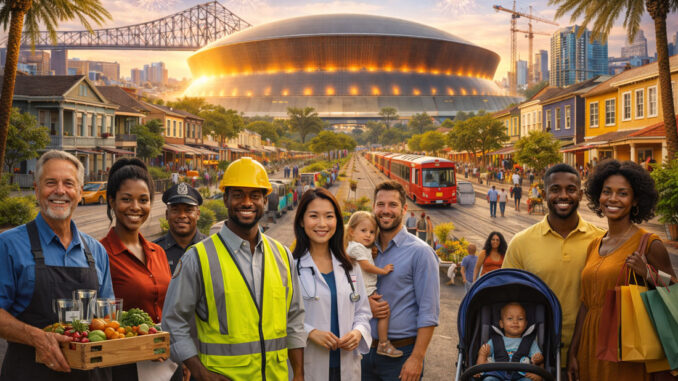
Residents from across New Orleans stand side by side, reflecting a shared commitment to rebuilding and strengthening the city. From workers and families to small business owners and public servants, the image captures an all-in moment—people coming together with purpose, resilience, and collective responsibility to make New Orleans safer, stronger, and better for all.
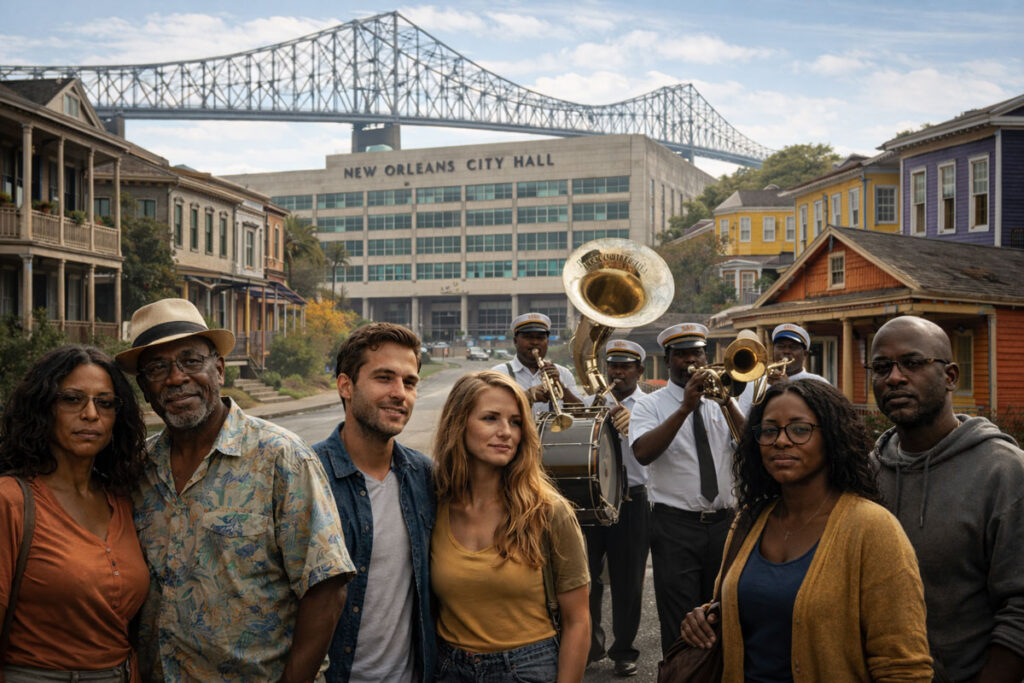
New Orleans stands at a pivotal moment—facing its challenges head-on to build a stronger, more inclusive future. The image reflects a city committed to creating a diverse economy, stronger schools, expanded opportunity, better infrastructure, improved public safety, and a higher quality of life for all who call New Orleans home.
Recommended For You.


Be the first to comment