
 Data News Weekly Contributor
More than a Century after Madam C.J. Walker broke economic and social barriers to become one of America’s first self-made female millionaires, a new generation of Black Entrepreneurs and business leaders is redefining wealth, ownership and economic influence.
Walker built a hair care empire designed to serve Black Women at a time when racism and sexism severely restricted economic opportunities. By creating a National Sales Network, she helped thousands of Black Women earn income and gain greater financial independence. Her legacy extended beyond business. Walker supported Black schools, churches and civil rights organizations, establishing a model of success rooted in both wealth creation and community service.
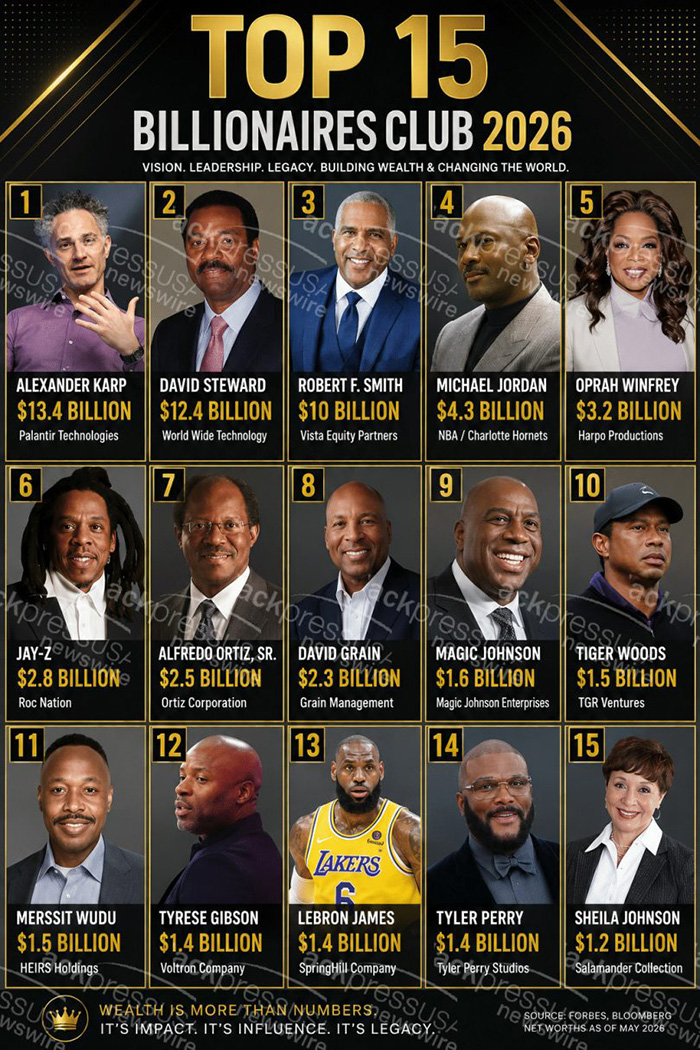
That spirit of entrepreneurship continues today as Black Billionaires build companies and invest across technology, finance, sports, entertainment, media and health care.
Robert L. Johnson made history in 2001 as America’s first Black Billionaire following the sale of Black Entertainment Television to Viacom. The milestone represented more than a major business transaction; it showed the growing power and potential of Black ownership in American media.
Today, technology leaders such as Alexander Karp and World Wide Technology Founder David Steward rank among the wealthiest Black business figures. Steward transformed a small technology company founded in 1990 into a global enterprise employing thousands of people. Private equity investor Robert F. Smith has also built enormous wealth through Vista Equity Partners while becoming widely recognized for paying off the student loan debt of Morehouse College’s Class of 2019.
Sports and entertainment have also become pathways to ownership and generational wealth.
Michael Jordan transformed basketball greatness into a multibillion-dollar business empire through the Jordan Brand, investments and professional sports ownership. Earvin “Magic” Johnson built a portfolio that includes real estate, entertainment and sports investments, often focusing on urban communities overlooked by traditional investors.
LeBron James and Tiger Woods have followed similar paths, using athletic success as a foundation for business ownership, media ventures and investments.
Oprah Winfrey remains one of the most influential media entrepreneurs in history. From television to production and publishing, Winfrey built a global brand while investing heavily in education and opportunities for young people.
Hip-hop Mogul Shawn “Jay-Z” Carter expanded his success beyond music through Roc Nation, technology investments and other business ventures. Tyler Perry built one of the nation’s largest independent film and television studios, creating jobs and opportunities for Black actors, writers, directors and production professionals.
Women also continue to make history. Sheila Johnson, Co-Founder of BET, became the first Black Female Billionaire and later expanded her business interests into hospitality and professional sports ownership.
A Legacy Greater Than Wealth
The Journey from Madam C.J. Walker’s Beauty Empire to today’s Black Billionaires represents a larger story of resilience, innovation and opportunity.
These business leaders have created jobs, supported scholarships, invested in Historically Black Colleges and Universities, revitalized communities and opened doors in industries where African Americans were once excluded.
Their success is about more than appearing on a billionaire list. It reflects the increasing influence of Black ownership and entrepreneurship in shaping the American and global economy.
From Walker’s pioneering vision to today’s billion-dollar enterprises, the story of Black wealth continues to evolve. It is also a reminder that a lasting legacy is measured not simply by dollars earned, but by opportunities created, communities strengthened and doors opened for the next generation.
Recommended For You.

Be the first to comment